Begin with a common question
A simulation and a test can both be correct while answering different questions. A model may assume steady operation at a fixed coolant temperature, while the hardware test includes a changing load and warming coolant. Comparing their final values without reconciling those conditions can misidentify the source of a discrepancy.
Write down the intended comparison before running either activity. State the operating point, measured quantity, relevant boundaries and acceptance basis.
Reconcile the inputs
Geometry, material properties, winding details and control assumptions should describe the tested configuration. Model records need enough traceability to distinguish an intended design from the hardware that was actually assembled.
Some properties will be uncertain. Record their source and plausible variation rather than silently replacing missing data with a nominal value. Sensitivity analysis can show whether an uncertain input is important to the decision or merely convenient to refine.
Understand the measurement
A test result includes instrumentation and processing choices. Sensor placement, calibration, bandwidth, sampling and averaging influence the quantity reported. A simulated internal value may not correspond directly to the available sensor signal.
Compare like with like. For a transient, align the time origin and initial conditions. For an averaged value, make sure the averaging interval and operating stability are understood. Retain enough raw context to investigate a difference later.
Check the model before calibrating it
Numerical errors and setup mistakes should be considered before tuning physical parameters. Units, boundary definitions, conservation checks and solution convergence are basic parts of establishing whether the model behaves as intended.
A mesh or time-step check asks whether numerical refinement materially changes the result of interest. It does not prove the physical assumptions are correct, but it helps avoid confusing a numerical artifact with missing physics.
Distinguish calibration from validation
Calibration adjusts uncertain model parameters using observations. Validation examines whether the model is adequate for its intended use against relevant evidence. A close fit to data used for adjustment is useful, but it is a weaker test of prediction than performance under additional conditions.
Reserve independent conditions where practical. The conditions should challenge the parts of the model that matter to the intended decision, rather than merely repeat the easiest operating point.
Report the useful range
A model can be adequate for one purpose and inadequate for another. It may support a concept comparison while remaining insufficient for a hot-spot limit or a manufacturing release.
Report the configuration, operating range and uncertainty behind the conclusion. When evidence is sparse, state which decisions the model can support now and which require more data. That boundary makes simulation more useful because the team knows how much weight to place on it.
This introductory editorial article is separate from Dr. Leng’s project record. No authored research-paper bibliography was supplied in the source document.
Connected expertise.
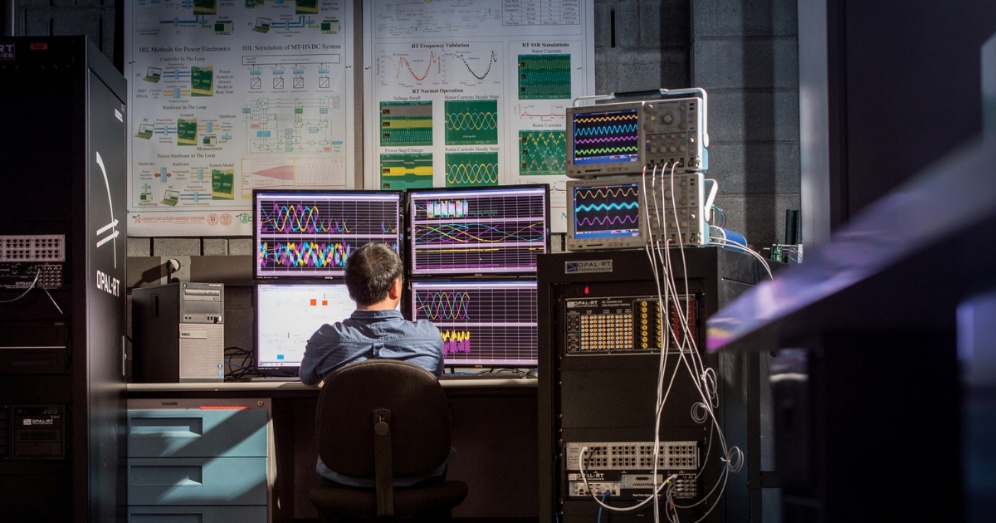
Hardware-in-the-loop test setup · supplied document
From offline simulation to real-time HIL.
Develop propulsion-system models in MATLAB/Simulink and bring machine and controller behavior into real-time testing.
Explore →Electric Aviation
Propulsion-control software development from system models to prototype aircraft flight.
Explore →Bring us your challenge.
Start with your application, constraints and the decision you need to make.